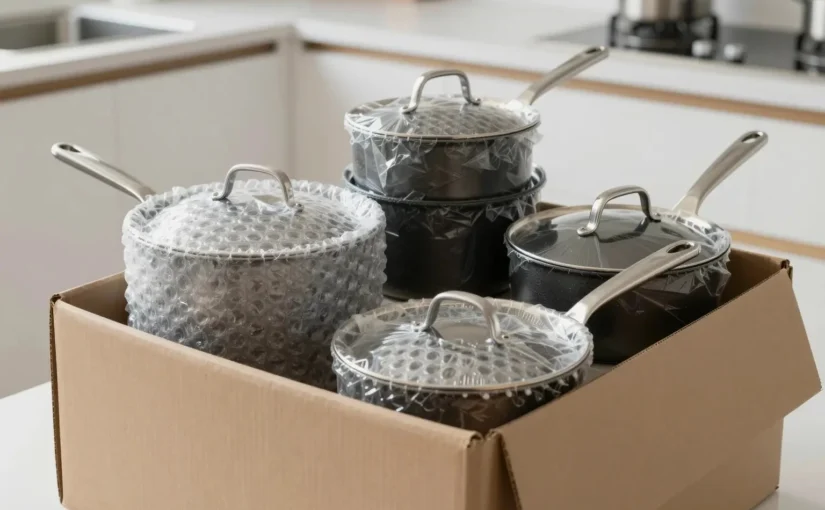
Moving can be a daunting task, especially when it comes to packing up your kitchen. The kitchen is often filled with fragile and oddly-shaped items like pots and pans that require special attention. In this guide, we’ll explore the best practices for packing pots and pans to ensure they arrive at your new home in perfect condition.
Gathering Your Packing Materials
Before you start packing, it’s essential to gather all the necessary materials. This will streamline the process and ensure your items are well-protected during transport.
- Boxes: Use sturdy, medium-sized boxes that can handle the weight of pots and pans without breaking.
- Bubble Wrap: This provides cushioning and protection for fragile items.
- Newspaper: Use this for additional padding and to fill gaps within boxes.
- Tape: Ensure you have strong packing tape to secure your boxes.
- Labeling Materials: Clearly labeling each box will help with organization and make unpacking easier.
Preparing Your Pots and Pans
Before packing, make sure all your pots and pans are clean and dry. This will prevent any odors or residues from transferring to your packing materials;
Protection and Cushioning
To protect your pots and pans, wrap each item individually. Use bubble wrap for the most delicate pieces, and secure it with tape. For less fragile items, newspaper can provide sufficient cushioning.
Stacking and Space Optimization
When packing, consider how your pots and pans nest together. Stack smaller pans inside larger ones to save space. Place a layer of bubble wrap or newspaper between each item to prevent scratches and movement during transport.
Packing the Boxes
Once your pots and pans are wrapped and ready, it’s time to start packing them into boxes.
Box Organization
- Bottom Layer: Start by placing the heaviest and largest pots and pans at the bottom of the box. This provides a stable base.
- Middle Layer: Add medium-sized items, ensuring they are securely cushioned and won’t shift during transport.
- Top Layer: Place the smallest and lightest items on top. Fill any gaps with newspaper or bubble wrap to prevent movement.
Securing the Contents
Once your box is packed, close it and shake it gently. If you hear movement, add more cushioning to secure the items. Use tape to seal the box securely, and label it clearly with its contents and destination room.
Transport and Unpacking
During the move, handle boxes labeled as “fragile” with care. When unloading, place kitchen boxes in the kitchen for efficient unpacking. When unpacking, start with the essential items to get your kitchen operational as quickly as possible.
Packing pots and pans for moving doesn’t have to be stressful. With the right materials and organization, you can ensure your kitchen items are transported safely and efficiently. Remember, the key is to provide ample cushioning, secure your boxes, and label everything clearly. Happy moving!